
Zaburzenia stawowo-żuchwowe zazwyczaj dotyczą starszej grupy wiekowej i wynikają z
problemów ze szczęką i kontrolującymi je mięśniami. Nieleczone mogą prowadzić do
nasilenia się problemów ze szczęką i mięśniami szyi. Natomiast zesztywnienie stawów
dotyczy głównie młodszej, pediatrycznej grupy wiekowej. Przyczyną zesztywnienia stawów
może być przebyta infekcja ucha, uraz porodowy lub uraz nabyty w okresie niemowlęcym
lub dziecięcym.
Aby postawić diagnozę, lekarz musi sprawdzić stawy szczękowe pod kątem bólu lub
tkliwości. Sprawdzi czy szczęka działa prawidłowo i nie blokuje się podczas otwierania lub
zamykania ust. Oceni również problemy z mięśniami twarzy. Przeprowadzane są również
dodatkowe badania, takie jak rezonans magnetyczny (MRI) lub tomografia komputerowa.
MRI może pokazać, czy TMJ znajduje się we właściwej pozycji.
Skontaktuj się z nami, jeśli chcesz dowiedzieć się więcej o zabiegu i procesie gojenia.
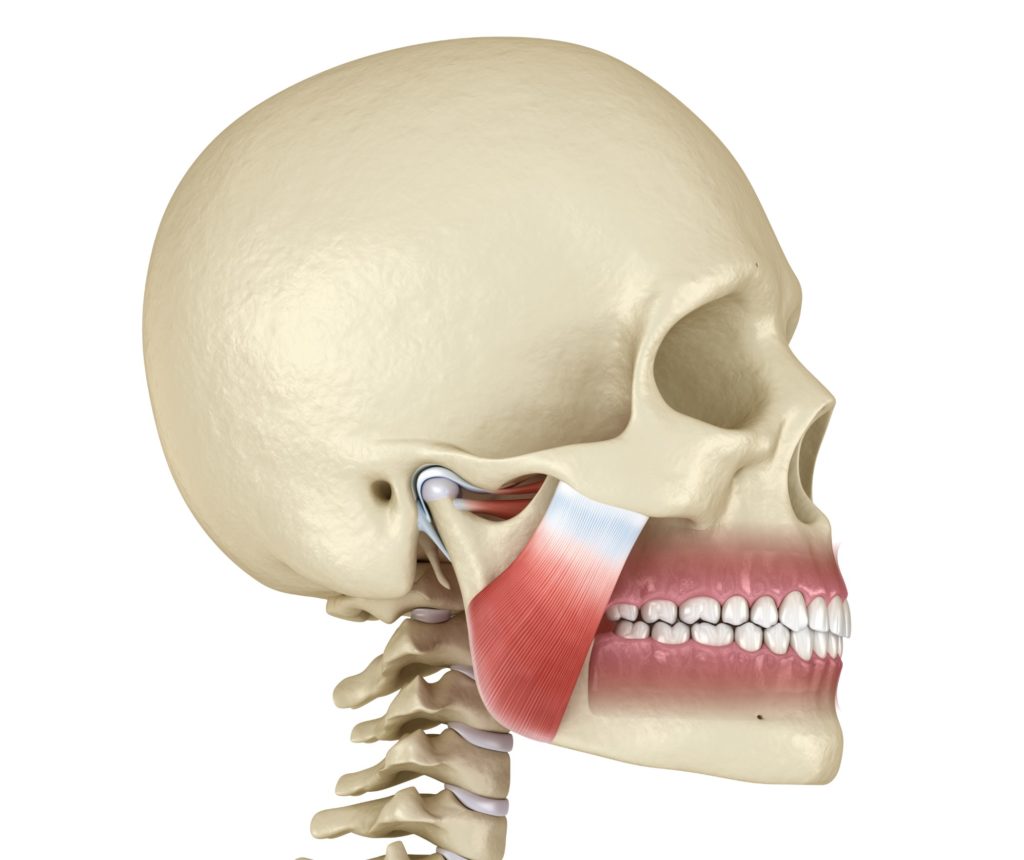
The joint at the junction of the temporal bones with the lower jaw is called the temporomandibular joint (TMJ). Two joints are on both sides of the skull in front of the ears. The joints are mobile and work together to provide smooth jaw movements. However, sometimes the muscles attached to the joint shift, which can lead to many problems. TMJ disorder can be caused by many factors, such as dental, myogenic, joint, or anatomical factors. To diagnose, the doctor will check your jaw joints for pain or tenderness and listen for clicks when you move them. He will also see that the jaw works properly and doesn’t lock when opening or closing your mouth. He will also check for problems with your facial muscles. The doctor may take a full X-Ray to evaluate your jaw and teeth. Other tests like magnetic resonance imaging (MRI) or computer tomography are also conducted. The MRI can show if the TMJ is in the correct position.
The common symptoms of TMJ disorder are
Difficulty in opening mouth wide
The ache in your face, jaw joint area, neck and shoulders, and ear when you chew, speak or open your mouth.
In the open or closed-mouth position, jaws get stuck.
When you open or close your mouth or chew, clicking sounds in the jaw joint.
Tiredness in the face.
Problem with chewing.
Swelling on the face.
You may also experience toothaches, headaches, neck aches, dizziness, earaches, shoulder pain, and tinnitus (ringing or buzzing in the ears).
Aftercare
Painkillers, like naproxen or ibuprofen, can relieve muscle pain and swelling. You should eat soft food. To avoid chewing, cut food into small pieces. Apply ice packs to the side of your face for around 10 minutes. Maintain good posture; this will help you reduce neck and facial pain. Do not open your mouth wide. Restrict extreme jaw movements. Practice stress reduction therapy, try to learn stress relaxation techniques to loosen up your jaw.