
La chirurgie orthognatique est une branche exclusive de la chirurgie
buccale et maxillo-faciale et fait partie du traitement orthodontique. Il
s’agit de modifier les mâchoires pour modifier leur ajustement et leur
position afin d’améliorer le fonctionnement de la bouche. La chirurgie
orthognatique est utilisée pour corriger une malocclusion sévère
résultant d’une mâchoire mal alignée. Il est généralement complété en
conjonction avec un traitement orthodontique ou des broches. La
procédure est réalisée sous anesthésie. La chirurgie nécessitera trois à
plusieurs jours d’hospitalisation. Pour obtenir le meilleur ajustement
des dents supérieures et inférieures dans la nouvelle position des
mâchoires, la plupart des gens ont besoin d’un traitement
orthodontique après la chirurgie pour améliorer l’alignement des dents.
Cela prendra de trois à douze mois, après quoi les broches sont retirées
(et les nouvelles broches peuvent les remplacer). Les problèmes de
mâchoire de tout le monde sont différents, alors consultez un
spécialiste et expliquez vos attentes. Vos fournisseurs de soins
médicaux vous expliqueront leurs recommandations pour résoudre vos
problèmes spécifiqueset ce à quoi vous pouvez vous attendre.
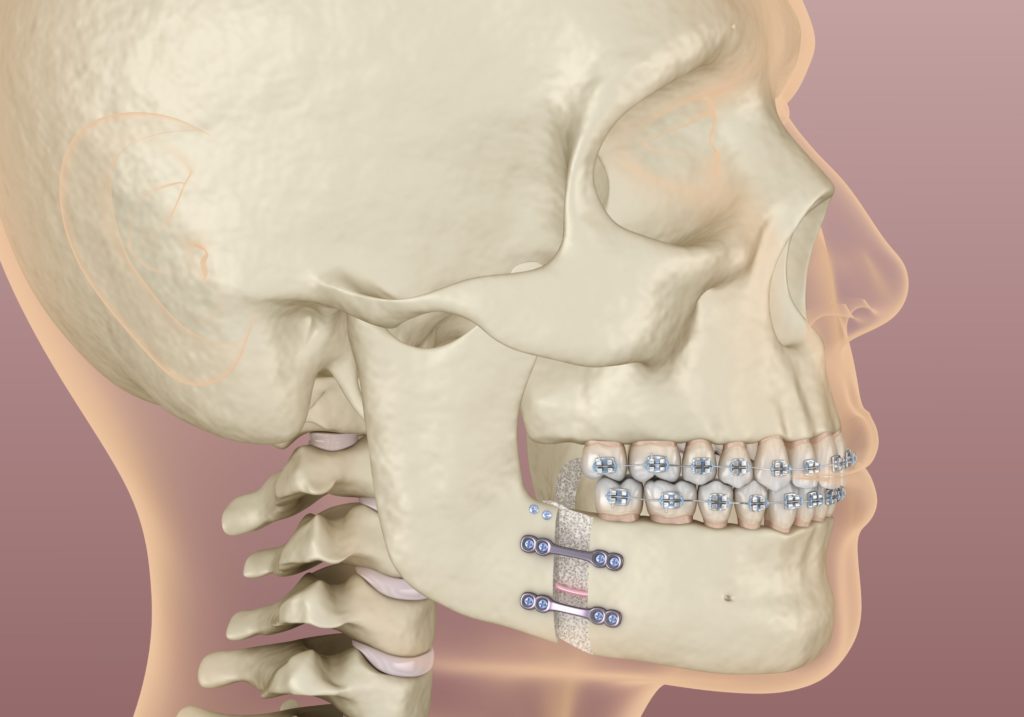
Orthognathic surgery is an exclusive branch of oral and maxillofacial surgery and is part of orthodontic treatment. It involves the alteration of the jaws to modify their adjustment and position to improve the functioning of the mouth. Orthognathic surgery is used to correct a severe malocclusion resulting from a misaligned jaw. It is usually completed in conjunction with orthodontic treatment or braces. The procedure is performed under anaesthesia. Surgery will require three to several days of hospitalisation.
To obtain the best fit of the upper and lower teeth in the new position of the jaws, most people require some orthodontic treatment after the surgery to improve the tooth alignment. This will take three to twelve months, after which the braces are removed (and the new braces may replace them). Everyone’s jaw problems differ, so consult a specialist and explain your expectations. Your medical providers will explain their recommendations to solve your specific issues and what you can expect.